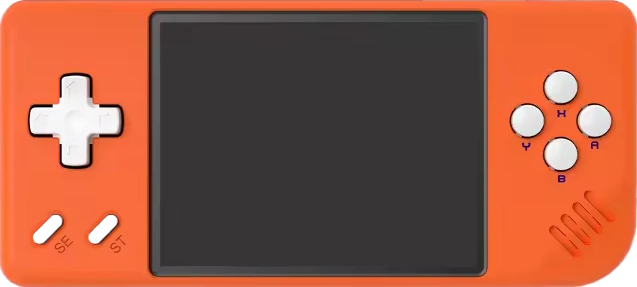
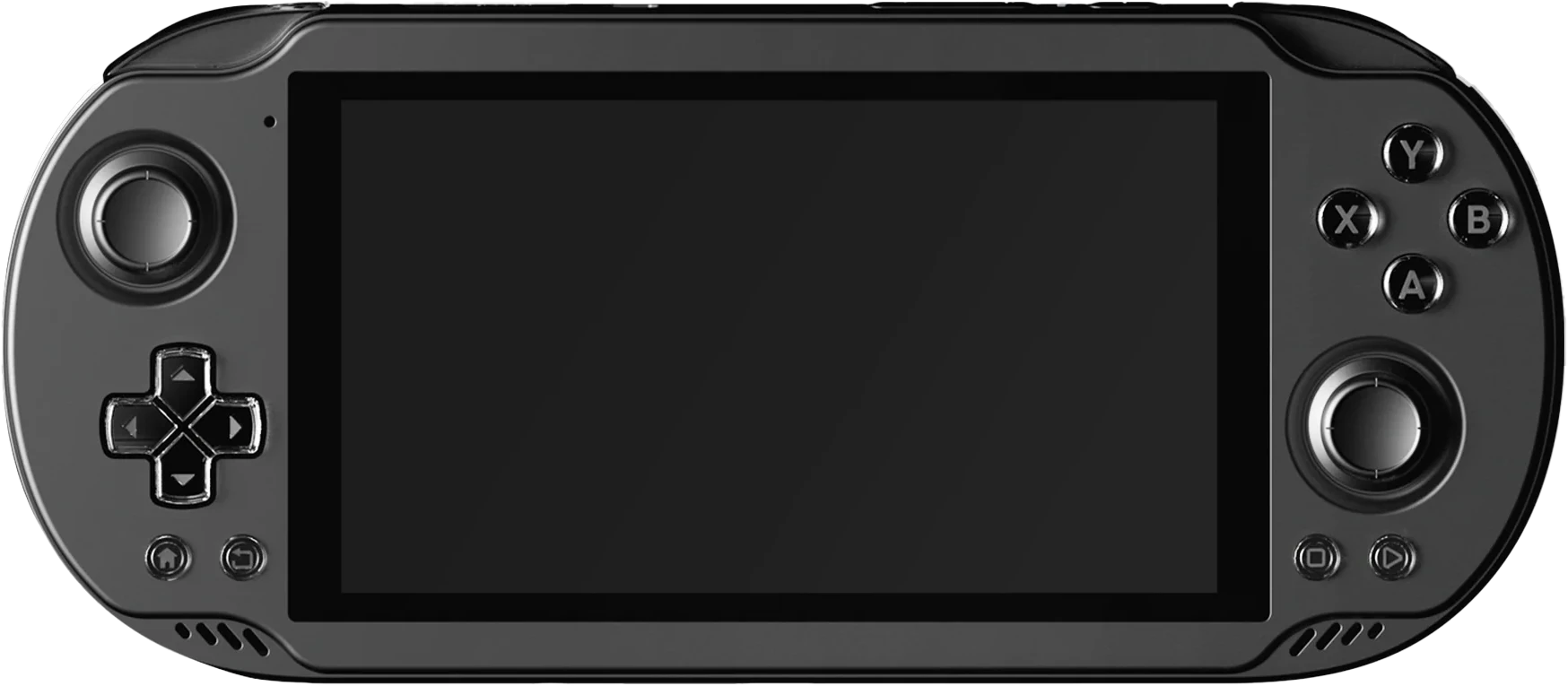
Physical Dimensions & Thickness: The Anbernic RG28XX has a horizontal bar chassis measuring 125 × 56.5 × 16.5 mm, while the AYN Odin 2 Mini uses a horizontal bar chassis measuring 198 × 85.8 × 19.5 mm. In width, the Anbernic RG28XX is 73 mm (36.9%) narrower than the AYN Odin 2 Mini. In height, the Anbernic RG28XX is 29.3 mm (34.1%) shorter than the AYN Odin 2 Mini. In chassis thickness (depth), the Anbernic RG28XX is 3 mm (15.4%) slimmer than the AYN Odin 2 Mini (16.5 mm vs 19.5 mm).
Footprint Area & Weight: Calculating surface footprint (width × height), the Anbernic RG28XX occupies 7,063 mm² (70.6 cm²), compared to 16,988 mm² (169.9 cm²) for the AYN Odin 2 Mini—a footprint difference of 9,925 mm² (58.4%). On the scale, the Anbernic RG28XX weighs 123g versus 320g for the AYN Odin 2 Mini, representing a 197g (61.6%) weight difference (Anbernic RG28XX is lighter).
4:3 vs 16:9 Effective Viewable Screen Size: For classic 4:3 retro games (PS1, SNES, N64, Dreamcast), the Anbernic RG28XX's 2.83" (4:3) panel yields a 2.83" effective diagonal (100% full screen without black bars (native 4:3)), while the AYN Odin 2 Mini's 5" (16:9) panel yields a 4.09" effective diagonal (75% active screen area with vertical pillarbox bars on the sides (native 16:9)). This gives the AYN Odin 2 Mini a 1.26" larger active 4:3 diagonal (108.4% more active display area). For 16:9 widescreen content (PSP, Switch, streaming), the Anbernic RG28XX delivers a 2.6" effective diagonal (75% screen usage) versus 5" (100% screen usage) on the AYN Odin 2 Mini, making the AYN Odin 2 Mini larger by 2.4" (+270.5% active 16:9 area).