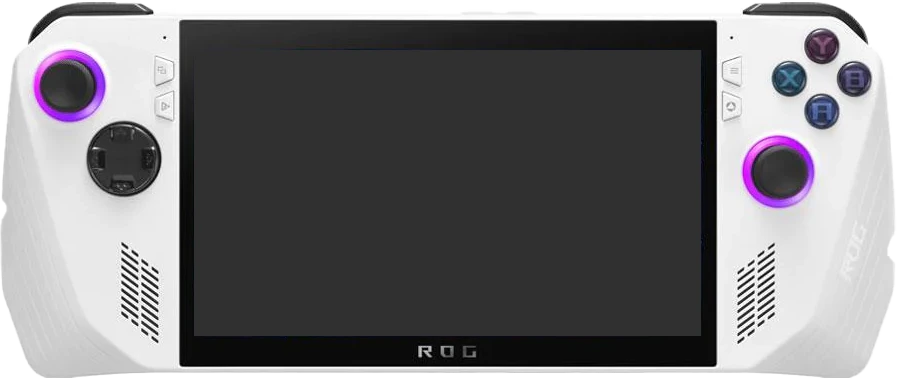
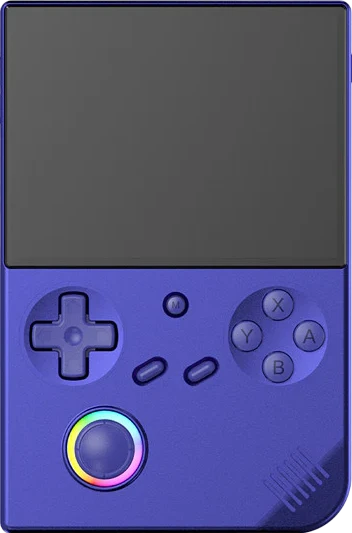
Physical Dimensions & Thickness: The ASUS ROG Ally X has a horizontal bar chassis measuring 280.2 × 114 × 36.9 mm, while the Retroid Pocket Classic uses a vertical (game boy style) chassis measuring 89.9 × 138 × 26 mm. In width, the ASUS ROG Ally X is 190.3 mm (211.7%) wider than the Retroid Pocket Classic. In height, the ASUS ROG Ally X is 24 mm (17.4%) shorter than the Retroid Pocket Classic. In chassis thickness (depth), the ASUS ROG Ally X is 10.9 mm (41.9%) thicker than the Retroid Pocket Classic (36.9 mm vs 26 mm).
Footprint Area & Weight: Calculating surface footprint (width × height), the ASUS ROG Ally X occupies 31,943 mm² (319.4 cm²), compared to 12,406 mm² (124.1 cm²) for the Retroid Pocket Classic—a footprint difference of 19,537 mm² (157.5%). On the scale, the ASUS ROG Ally X weighs 678g versus 223g for the Retroid Pocket Classic, representing a 455g (204%) weight difference (Retroid Pocket Classic is lighter).
4:3 vs 16:9 Effective Viewable Screen Size: For classic 4:3 retro games (PS1, SNES, N64, Dreamcast), the ASUS ROG Ally X's 7" (16:9) panel yields a 5.72" effective diagonal (75% active screen area with vertical pillarbox bars on the sides (native 16:9)), while the Retroid Pocket Classic's 3.92" (31:27) panel yields a 3.69" effective diagonal (86% active screen area with horizontal letterbox bars on top and bottom (native 31:27)). This gives the ASUS ROG Ally X a 2.03" larger active 4:3 diagonal (139.6% more active display area). For 16:9 widescreen content (PSP, Switch, streaming), the ASUS ROG Ally X delivers a 7" effective diagonal (100% screen usage) versus 3.39" (65% screen usage) on the Retroid Pocket Classic, making the ASUS ROG Ally X larger by 3.61" (+326% active 16:9 area).