//
Direct 1:1 Comparison ·
ASUS ROG Xbox Ally X20vsLenovo Legion Go
Quick verdict: Comparing the ASUS ROG Xbox Ally X20 (300 × 121 × 27.5 mm, 756 g) side-by-side against the Lenovo Legion Go (299 × 131 × 41 mm, 854 g) reveals a 1 mm width difference and 13.5 mm thickness gap. For 4:3 classics (SNES/PS1), the ASUS ROG Xbox Ally X20 renders an effective 6.05" image (75% panel usage) versus 7.77" (83%) on the Lenovo Legion Go.
More compact: ROG Xbox Ally X20Larger screen: Legion Go (8.8")Lighter: ROG Xbox Ally X20 (756g)
1:1 mm
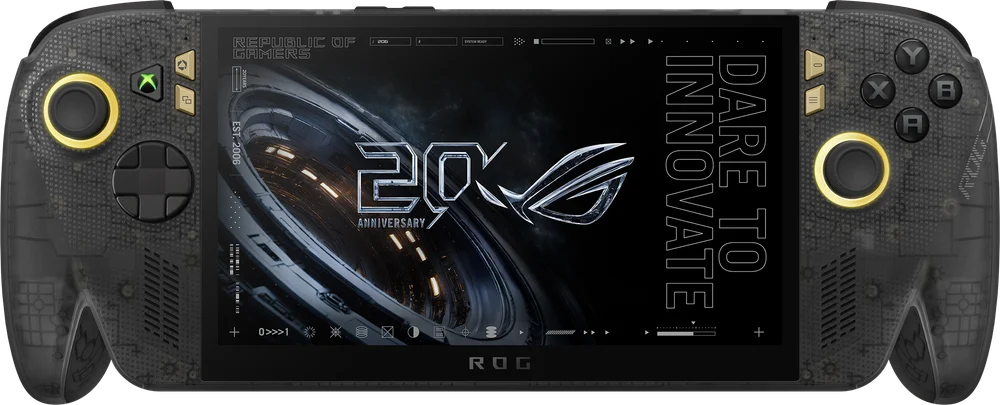
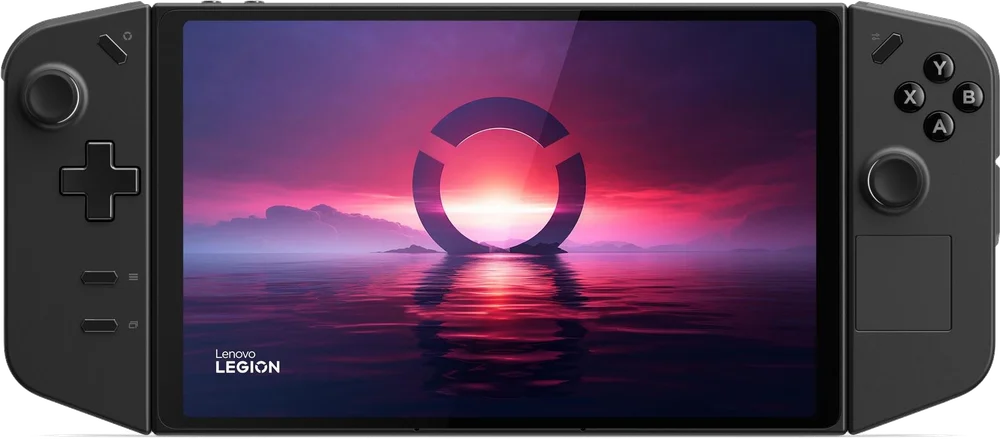
[A] ROG Xbox Ally X20: 300×121mm[B] Legion Go: 299×131mm
Ref:
ROG Xbox Ally X20
OLED7.4"16:9 · 298 PPI
1920x1080
Legion Go
IPS8.8"16:10 · 343 PPI
2560x1600
What Systems Can They Emulate?
TieVery similar emulation performance: both cover the same classic console range.
SystemROG Xbox Ally X20Legion Go
T1
GBGame Boy / GBC
Perfect
Perfect
T1
NESNES / Master System
Perfect
Perfect
T2
SNESSNES / Genesis
Perfect
Perfect
T2
GBAGame Boy Advance
Perfect
Perfect
T3
PS1PlayStation 1
Perfect
Perfect
T3
N64Nintendo 64
Perfect
Perfect
T4
PSPPSP
Perfect
Perfect
T4
DCDreamcast
Perfect
Perfect
T4
NDSNintendo DS
Perfect
Perfect
T5
GC/WiiGameCube / Wii
Perfect
Perfect
T5
PS2PlayStation 2
Perfect
Perfect
T6
3DSNintendo 3DS
Perfect
Perfect
T7
SwitchSwitch
Playable
Playable
T7
PS3PlayStation 3
Playable
Playable
Perfect
Playable
Mixed
No
Community benchmarks + chipset (SoC) calibration.Specifications Comparison
SpecASUS ROG Xbox Ally X20Lenovo Legion Go
- Dimensions
- 300 × 121 × 27.5 mm
- 299 × 131 × 41 mm
- Volume
- 998.3 cm³-38%
- 1605.9 cm³
- Weight
- 756 g-98g
- 854 g
- Pocketability
- 1 / 10
- 1 / 10
- Screen
- 7.4" · 16:9
- 8.8" · 16:10+1.4"
- Screen Area
- 151 cm²
- 224.5 cm²
- Resolution
- 1920x1080
- 2560x1600
- Pixel Density (PPI)
- 298 PPI
- 343 PPI+45
- Display Type
- OLED
- IPS
- GBA Integer Scale
- 6× (75%)
- 10× (94%)
- SNES Integer Scale
- 4× (83%)
- 7× (98%)
- Emulation Ceiling
- PC Gaming / PS3 / Xbox 360
- PC Gaming / PS3 / Xbox 360
- Chipset (SoC)
- AMD Ryzen AI Z2 Extreme
- AMD Ryzen Z1 / AMD Ryzen Z1 Extreme
- RAM
- 24 GB LPDDR5X (8000 MT/s)
- 16 GB LPDDR5X (7500 MT/s)
- Battery
- 10,390 mAh+4,000
- 6,390 mAh
- OS
- Windows 11
- Windows 11
- Approx. Price
- ~$1300 USD
- ~$799 USD
Green check marks the numeric winner in each row. Smaller & lighter wins for dimensions and weight.
Compare live pricing across Amazon, AliExpress, and official stores. Affiliate links at no extra cost.
More compactASUS ROG Xbox Ally X20
SlimmerROG Xbox Ally X20 (27.5mm)
Larger screenLegion Go (8.8")
LighterROG Xbox Ally X20 (756g)
Which one should you buy?
Comparing the ASUS ROG Xbox Ally X20 (300 × 121 × 27.5 mm, 756 g) side-by-side against the Lenovo Legion Go (299 × 131 × 41 mm, 854 g) reveals a 1 mm width difference and 13.5 mm thickness gap. For 4:3 classics (SNES/PS1), the ASUS ROG Xbox Ally X20 renders an effective 6.05" image (75% panel usage) versus 7.77" (83%) on the Lenovo Legion Go.
Best for PortabilityASUS ROG Xbox Ally X20
ASUS ROG Xbox Ally X20 is 38% smaller by volume (998.3 vs 1605.9 cm³) and 98 g lighter, scoring 1/10 for pocketability.
Best Screen & SharpnessLenovo Legion Go
ASUS ROG Xbox Ally X20 delivers a 7.4" OLED panel (151 cm², 298 PPI) vs 8.8" IPS (224.5 cm², 343 PPI) on Lenovo Legion Go. The OLED display on ASUS ROG Xbox Ally X20 makes black bars disappear.
Emulation & PowerSame tier
Both target the "PC Gaming / PS3 / Xbox 360" emulation tier. Choose based on ergonomics, aspect ratio (16:9 vs 16:10), and battery (10390 vs 6390 mAh).
Battery & ValueASUS ROG Xbox Ally X20
ASUS ROG Xbox Ally X20 packs +4,000 mAh more capacity (10,390 vs 6,390 mAh). Typical retail price: ~$1300 vs ~$799 USD.
Effective Screen Size by Retro System
Diagonal inches can be misleading: see the real playable image size for 4:3 (SNES/PS1), 3:2 (GBA), and 16:9 (PSP).
| System | ROG Xbox Ally X20 | Legion Go |
|---|---|---|
| SNES / PS1 / NES (4:3) | 6.05" (75%) | 7.77" (83%) |
| Game Boy Advance (3:2) | 6.54" (84%) | 8.41" (94%) |
| PSP / Widescreen (16:9) | 7.4" (100%) | 8.56" (90%) |
| Game Boy / GBC (10:9) | 5.42" (63%) | 6.97" (69%) |
Frequently Asked Questions
Which is bigger: the ASUS ROG Xbox Ally X20 or the Lenovo Legion Go?
The Lenovo Legion Go has the larger physical footprint (998.3 cm³ vs 1605.9 cm³). The ASUS ROG Xbox Ally X20 measures 300 × 121 × 27.5 mm (756 g), whereas the Lenovo Legion Go measures 299 × 131 × 41 mm (854 g).
Which has a larger effective screen for GBA and SNES games?
For GBA (3:2), the ASUS ROG Xbox Ally X20 produces a 6.54" active image (84% panel usage, 6× integer scale) vs 8.41" (94%, 10× integer scale) on the Lenovo Legion Go. For 4:3 SNES/PS1 games, active screen sizes are 6.05" vs 7.77".
Which handheld has the sharper display (higher PPI)?
The ASUS ROG Xbox Ally X20 has 298 PPI (1920x1080 across 7.4") compared to 343 PPI (2560x1600 across 8.8") on the Lenovo Legion Go. Higher PPI gives cleaner CRT shaders and crisp integer scaling.
What systems can the ASUS ROG Xbox Ally X20 and Lenovo Legion Go emulate?
Powered by AMD Ryzen AI Z2 Extreme, the ASUS ROG Xbox Ally X20 comfortably plays Native Steam/PC games, PS3, Xbox 360 & Switch. Powered by AMD Ryzen Z1 / AMD Ryzen Z1 Extreme, the Lenovo Legion Go comfortably plays Native Steam/PC games, PS3, Xbox 360 & Switch.
Related Comparisons
Compare these handhelds against their closest size and price rivals.