//
Direct 1:1 Comparison ·
Miyoo MinivsTrimUI Brick
Quick verdict: Comparing the Miyoo Mini (65 × 93.5 × 18 mm, 106 g) side-by-side against the TrimUI Brick (73.2 × 109.9 × 11.8 mm, 159 g) reveals a 8.2 mm width difference and 6.2 mm thickness gap. For 4:3 classics (SNES/PS1), the Miyoo Mini renders an effective 2.8" image (100% panel usage) versus 3.2" (100%) on the TrimUI Brick.
More compact: BrickLarger screen: Brick (3.2")Lighter: Mini (106g)
1:1 mm
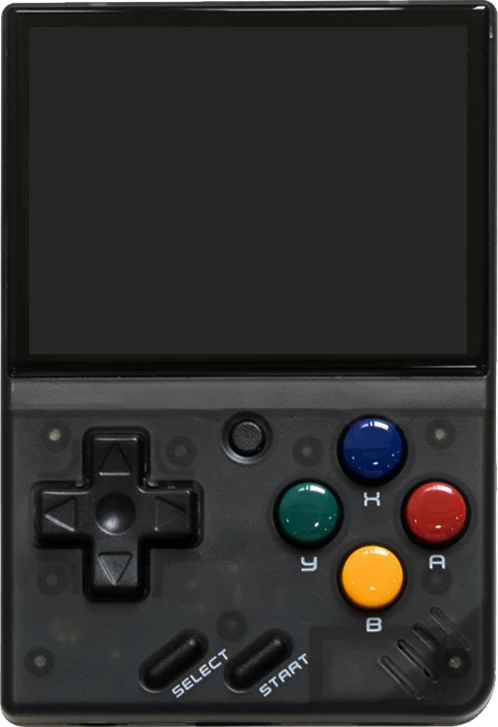
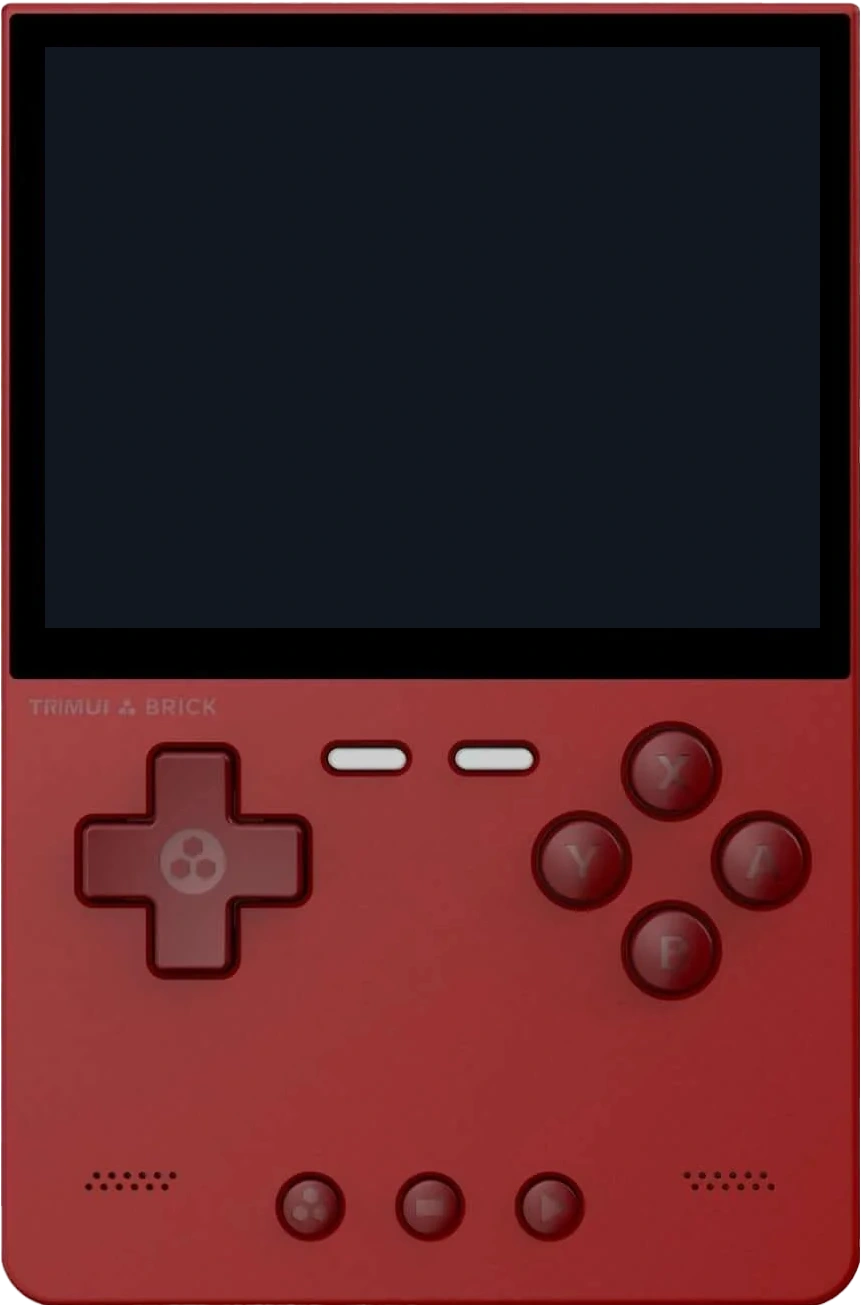
[A] Mini: 65×93.5mm[B] Brick: 73.2×109.9mm
Ref:
Mini
IPS2.8"4:3 · 286 PPI
640x480
Brick
IPS3.2"4:3 · 400 PPI
1024x768
What Systems Can They Emulate?
EdgeTrimUI Brick delivers stronger headroom and smoother framerates on demanding systems than Miyoo Mini.
SystemMiniBrick
T1
GBGame Boy / GBC
Perfect
Perfect
T1
NESNES / Master System
Perfect
Perfect
T2
SNESSNES / Genesis
Perfect
Perfect
T2
GBAGame Boy Advance
Perfect
Perfect
T3
PS1PlayStation 1
Playable
Playable
T3
N64Nintendo 64
No
Mixed
T4
PSPPSP
No
No
T4
DCDreamcast
No
No
T4
NDSNintendo DS
No
No
T5
GC/WiiGameCube / Wii
No
No
T5
PS2PlayStation 2
No
No
T6
3DSNintendo 3DS
No
No
T7
SwitchSwitch
No
No
T7
PS3PlayStation 3
No
No
Perfect
Playable
Mixed
No
Based on community benchmarks (r/SBCGaming).Specifications Comparison
SpecMiyoo MiniTrimUI Brick
- Dimensions
- 65 × 93.5 × 18 mm
- 73.2 × 109.9 × 11.8 mm
- Volume
- 109.4 cm³
- 94.9 cm³-13%
- Weight
- 106 g-53g
- 159 g
- Pocketability
- 10 / 10
- 10 / 10
- Screen
- 2.8" · 4:3
- 3.2" · 4:3+0.4"
- Screen Area
- 24.3 cm²
- 31.7 cm²
- Resolution
- 640x480
- 1024x768
- Pixel Density (PPI)
- 286 PPI
- 400 PPI+114
- Display Type
- IPS
- IPS
- GBA Integer Scale
- 2× (75%)
- 4× (94%)
- SNES Integer Scale
- 2× (93%)
- 3× (88%)
- Emulation Ceiling
- Up to PS1
- Up to N64 / DC / PSP
- Chipset (SoC)
- SigmaStar SSD202D
- Allwinner A133 Plus
- RAM
- 128 MB DDR3
- 1 GB LPDDR3
- Battery
- 2,000 mAh
- 3,000 mAh+1,000
- OS
- Onion OS, MinUI
- Linux (Tina)
- Approx. Price
- ~$52 USD
- ~$80 USD
Green check marks the numeric winner in each row. Smaller & lighter wins for dimensions and weight.
Compare live pricing across Amazon, AliExpress, and official stores. Affiliate links at no extra cost.
More compactTrimUI Brick
SlimmerBrick (11.8mm)
Larger screenBrick (3.2")
LighterMini (106g)
Which one should you buy?
Comparing the Miyoo Mini (65 × 93.5 × 18 mm, 106 g) side-by-side against the TrimUI Brick (73.2 × 109.9 × 11.8 mm, 159 g) reveals a 8.2 mm width difference and 6.2 mm thickness gap. For 4:3 classics (SNES/PS1), the Miyoo Mini renders an effective 2.8" image (100% panel usage) versus 3.2" (100%) on the TrimUI Brick.
Best for PortabilityTrimUI Brick
TrimUI Brick is 13% smaller by volume (94.9 vs 109.4 cm³) and 53 g lighter, scoring 10/10 for pocketability.
Best Screen & SharpnessTrimUI Brick
Miyoo Mini delivers a 2.8" IPS panel (24.3 cm², 286 PPI) vs 3.2" IPS (31.7 cm², 400 PPI) on TrimUI Brick.
Emulation & PowerTrimUI Brick
TrimUI Brick pushes emulation up to "Up to N64 / DC / PSP" powered by Allwinner A133 Plus, compared to "Up to PS1" on Miyoo Mini.
Battery & ValueTrimUI Brick
TrimUI Brick packs +1,000 mAh more capacity (3,000 vs 2,000 mAh). Typical retail price: ~$52 vs ~$80 USD.
Effective Screen Size by Retro System
Diagonal inches can be misleading: see the real playable image size for 4:3 (SNES/PS1), 3:2 (GBA), and 16:9 (PSP).
| System | Mini | Brick |
|---|---|---|
| SNES / PS1 / NES (4:3) | 2.8" (100%) | 3.2" (100%) |
| Game Boy Advance (3:2) | 2.69" (89%) | 3.08" (89%) |
| PSP / Widescreen (16:9) | 2.57" (75%) | 2.94" (75%) |
| Game Boy / GBC (10:9) | 2.51" (83%) | 2.87" (83%) |
Frequently Asked Questions
Which is bigger: the Miyoo Mini or the TrimUI Brick?
The Miyoo Mini has the larger physical footprint (109.4 cm³ vs 94.9 cm³). The Miyoo Mini measures 65 × 93.5 × 18 mm (106 g), whereas the TrimUI Brick measures 73.2 × 109.9 × 11.8 mm (159 g).
Which has a larger effective screen for GBA and SNES games?
For GBA (3:2), the Miyoo Mini produces a 2.69" active image (89% panel usage, 2× integer scale) vs 3.08" (89%, 4× integer scale) on the TrimUI Brick. For 4:3 SNES/PS1 games, active screen sizes are 2.8" vs 3.2".
Which handheld has the sharper display (higher PPI)?
The Miyoo Mini has 286 PPI (640x480 across 2.8") compared to 400 PPI (1024x768 across 3.2") on the TrimUI Brick. Higher PPI gives cleaner CRT shaders and crisp integer scaling.
What systems can the Miyoo Mini and TrimUI Brick emulate?
Powered by SigmaStar SSD202D, the Miyoo Mini comfortably plays NES, SNES, GB/GBC, GBA, Mega Drive, PS1. Powered by Allwinner A133 Plus, the TrimUI Brick comfortably plays PS1, N64, Dreamcast, NDS & light PSP.
Related Comparisons
Compare these handhelds against their closest size and price rivals.