//
Direct 1:1 Comparison ·
Nintendo Game Boy ColorvsTrimUI Brick
Quick verdict: Comparing the Nintendo Game Boy Color (75 × 133 × 27 mm, 138 g) side-by-side against the TrimUI Brick (73.2 × 109.9 × 11.8 mm, 159 g) reveals a 1.8 mm width difference and 15.2 mm thickness gap. For 4:3 classics (SNES/PS1), the Nintendo Game Boy Color renders an effective 2.14" image (83% panel usage) versus 3.2" (100%) on the TrimUI Brick.
More compact: BrickLarger screen: Brick (3.2")Lighter: Game Boy Color (138g)
1:1 mm
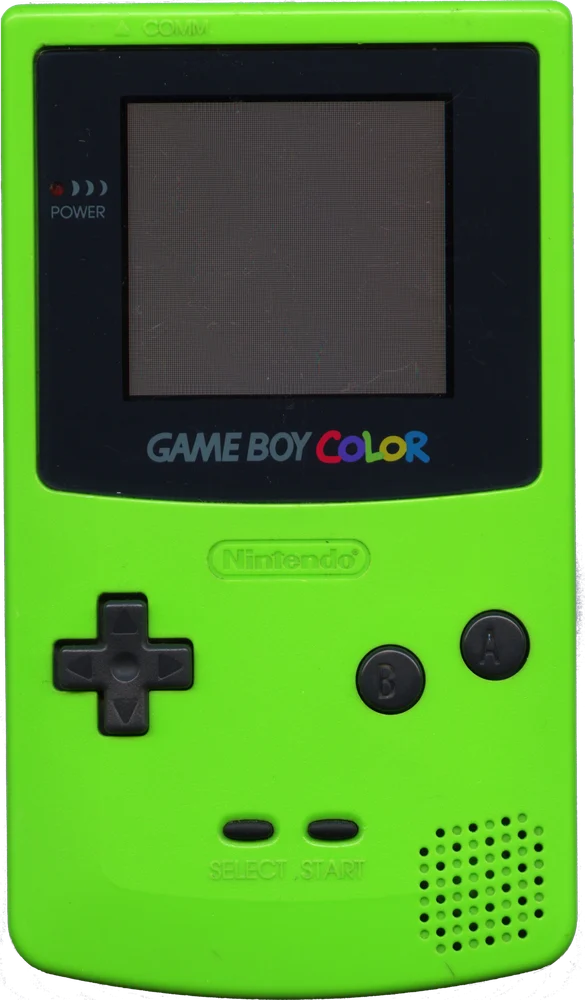
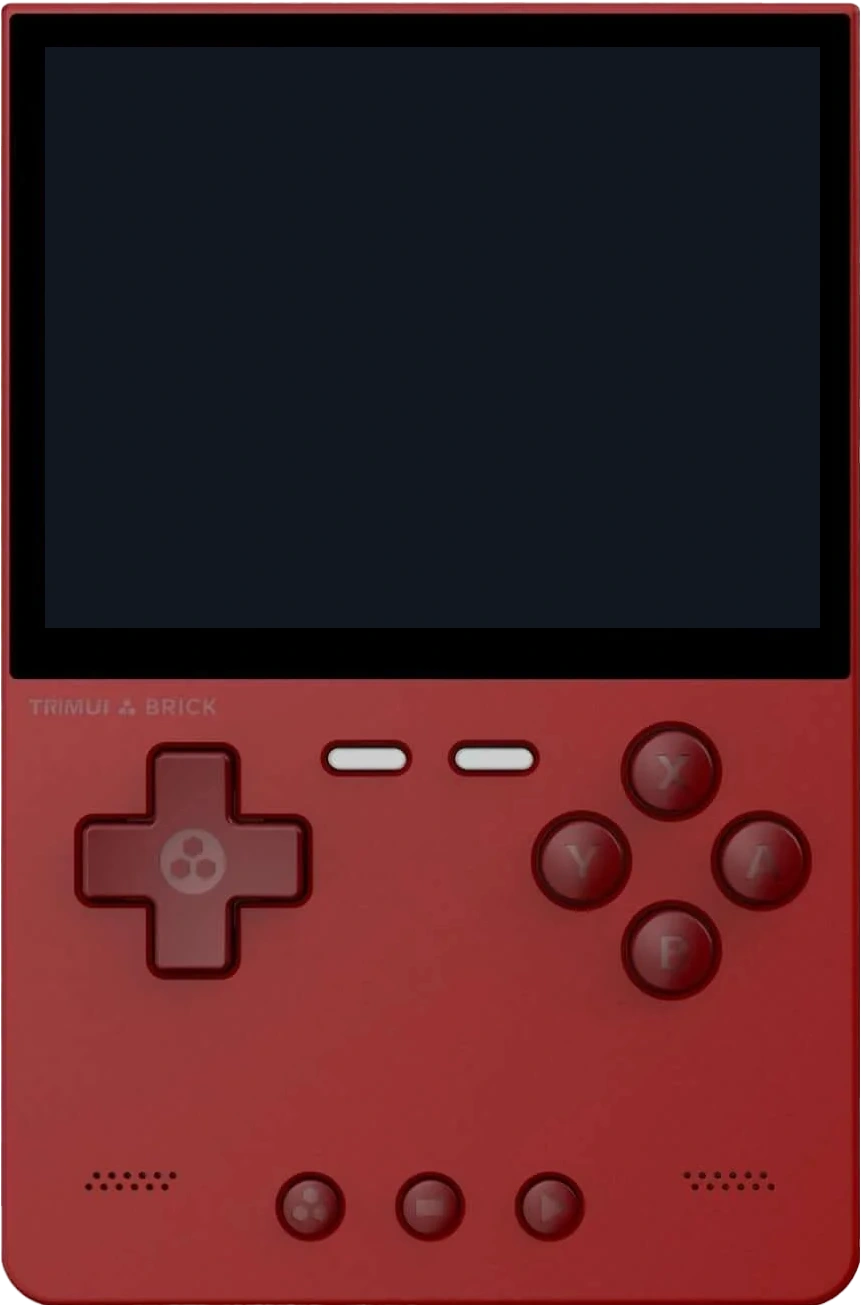
[A] Game Boy Color: 75×133mm[B] Brick: 73.2×109.9mm
Ref:
Game Boy Color
IPS2.3"10:9 · 94 PPI
160x144
Brick
IPS3.2"4:3 · 400 PPI
1024x768
What Systems Can They Emulate?
TieVery similar emulation performance: both cover the same classic console range.
SystemGame Boy ColorBrick
T1
GBGame Boy / GBC
Perfect
Perfect
T1
NESNES / Master System
Perfect
Perfect
T2
SNESSNES / Genesis
Perfect
Perfect
T2
GBAGame Boy Advance
Perfect
Perfect
T3
PS1PlayStation 1
Playable
Playable
T3
N64Nintendo 64
No
Mixed
T4
PSPPSP
No
No
T4
DCDreamcast
No
No
T4
NDSNintendo DS
Mixed
No
T5
GC/WiiGameCube / Wii
No
No
T5
PS2PlayStation 2
No
No
T6
3DSNintendo 3DS
No
No
T7
SwitchSwitch
No
No
T7
PS3PlayStation 3
No
No
Perfect
Playable
Mixed
No
Community benchmarks + chipset (SoC) calibration.Specifications Comparison
SpecNintendo Game Boy ColorTrimUI Brick
- Dimensions
- 75 × 133 × 27 mm
- 73.2 × 109.9 × 11.8 mm
- Volume
- 269.3 cm³
- 94.9 cm³-65%
- Weight
- 138 g-21g
- 159 g
- Pocketability
- 8.3 / 10
- 10 / 10
- Screen
- 2.3" · 10:9
- 3.2" · 4:3+0.9"
- Screen Area
- 17 cm²
- 31.7 cm²
- Resolution
- 160x144
- 1024x768
- Pixel Density (PPI)
- 94 PPI
- 400 PPI+306
- Display Type
- IPS
- IPS
- GBA Integer Scale
- 1× (100%)
- 4× (94%)
- SNES Integer Scale
- 1× (100%)
- 3× (88%)
- Emulation Ceiling
- Up to PS1
- Up to N64 / DC / PSP
- Chipset (SoC)
- Sharp LR35902 @ 8.38 MHz
- Allwinner A133 Plus
- RAM
- 32 KB
- 1 GB LPDDR3
- Battery
- 1,800 mAh
- 3,000 mAh+1,200
- OS
- Nintendo BIOS
- Linux (Tina)
- Approx. Price
- ~$70 USD
- ~$80 USD
Green check marks the numeric winner in each row. Smaller & lighter wins for dimensions and weight.
Compare live pricing across Amazon, AliExpress, and official stores. Affiliate links at no extra cost.
More compactTrimUI Brick
SlimmerBrick (11.8mm)
Larger screenBrick (3.2")
LighterGame Boy Color (138g)
Which one should you buy?
Comparing the Nintendo Game Boy Color (75 × 133 × 27 mm, 138 g) side-by-side against the TrimUI Brick (73.2 × 109.9 × 11.8 mm, 159 g) reveals a 1.8 mm width difference and 15.2 mm thickness gap. For 4:3 classics (SNES/PS1), the Nintendo Game Boy Color renders an effective 2.14" image (83% panel usage) versus 3.2" (100%) on the TrimUI Brick.
Best for PortabilityTrimUI Brick
TrimUI Brick is 65% smaller by volume (94.9 vs 269.3 cm³) and 21 g lighter, scoring 10/10 for pocketability.
Best Screen & SharpnessTrimUI Brick
Nintendo Game Boy Color delivers a 2.3" IPS panel (17 cm², 94 PPI) vs 3.2" IPS (31.7 cm², 400 PPI) on TrimUI Brick.
Emulation & PowerTrimUI Brick
TrimUI Brick pushes emulation up to "Up to N64 / DC / PSP" powered by Allwinner A133 Plus, compared to "Up to PS1" on Nintendo Game Boy Color.
Battery & ValueTrimUI Brick
TrimUI Brick packs +1,200 mAh more capacity (3,000 vs 1,800 mAh). Typical retail price: ~$70 vs ~$80 USD.
Effective Screen Size by Retro System
Diagonal inches can be misleading: see the real playable image size for 4:3 (SNES/PS1), 3:2 (GBA), and 16:9 (PSP).
| System | Game Boy Color | Brick |
|---|---|---|
| SNES / PS1 / NES (4:3) | 2.14" (83%) | 3.2" (100%) |
| Game Boy Advance (3:2) | 2.05" (74%) | 3.08" (89%) |
| PSP / Widescreen (16:9) | 1.96" (63%) | 2.94" (75%) |
| Game Boy / GBC (10:9) | 2.3" (100%) | 2.87" (83%) |
Frequently Asked Questions
Which is bigger: the Nintendo Game Boy Color or the TrimUI Brick?
The Nintendo Game Boy Color has the larger physical footprint (269.3 cm³ vs 94.9 cm³). The Nintendo Game Boy Color measures 75 × 133 × 27 mm (138 g), whereas the TrimUI Brick measures 73.2 × 109.9 × 11.8 mm (159 g).
Which has a larger effective screen for GBA and SNES games?
For GBA (3:2), the Nintendo Game Boy Color produces a 2.05" active image (74% panel usage, 1× integer scale) vs 3.08" (89%, 4× integer scale) on the TrimUI Brick. For 4:3 SNES/PS1 games, active screen sizes are 2.14" vs 3.2".
Which handheld has the sharper display (higher PPI)?
The Nintendo Game Boy Color has 94 PPI (160x144 across 2.3") compared to 400 PPI (1024x768 across 3.2") on the TrimUI Brick. Higher PPI gives cleaner CRT shaders and crisp integer scaling.
What systems can the Nintendo Game Boy Color and TrimUI Brick emulate?
Powered by Sharp LR35902 @ 8.38 MHz, the Nintendo Game Boy Color comfortably plays NES, SNES, GB/GBC, GBA, Mega Drive, PS1. Powered by Allwinner A133 Plus, the TrimUI Brick comfortably plays PS1, N64, Dreamcast, NDS & light PSP.
Related Comparisons
Compare these handhelds against their closest size and price rivals.